I have been snorkeling and diving in the Egyptian Red Sea since 1995, and Hurghada is still one of the easiest places in the world to get started. The water is warm, the bays are shallow and sandy, and there are coral reefs and islands all along the coast. But Hurghada is a big area – and where you snorkel makes a huge difference to what you will see.
Here is my guide to the best snorkeling spots in Hurghada – from the house reefs south of the city to the islands you reach by boat – and when to go.
Hurghada town or the bays further south?
If you stay in Hurghada town, the reefs right in front of the hotels are not the best. Much of the coast has been built on, and the shallow reef flats have suffered. You will still find fish and corals, but for good snorkeling you need to go a bit further south.
Go to: Makadi Bay, Sahl Hasheesh, Soma Bay and Safaga. They all have hotels with good house reefs, where you can snorkel from the beach or from a jetty. North of the city, El Gouna is built around artificial lagoons – not great for snorkeling, so here too the best reefs are reached by boat.
If you have not booked your hotel yet, check the house reef before you choose. I have written about how to find a hotel with a good house reef.
The best snorkeling spots in Hurghada
Once you are confident in the water after a few days at the house reef you may want to take a day-trip. Almost every hotel and dive centre sells day trips, and a typical trip stops at two or three reefs. These are the names you will hear:
Giftun Island – Mahmya and Orange Bay
The classic Hurghada day trip. Giftun is a protected island about 45 minutes by boat from the coast, and the beach clubs Mahmya and Orange Bay are both here. Shallow turquoise lagoons and white sand – perfect for a swim and a relaxed first snorkel. The fish are where the sand meets the reef, so swim out to the coral heads and the reef edge.
Abu Ramada and Magawish
Abu Ramada and the reefs around Magawish are often part of the snorkeling trips. Here the reef is more alive, with big schools of fish, morays in the crevices and, with a bit of luck, a turtle or a Napoleon wrasse.
Dolphin House (Sha’ab El Erg)
North of Hurghada lies the horseshoe-shaped reef Sha’ab El Erg, known as Dolphin House. Indo-Pacific bottlenose dolphins use the reef as a resting area. There are rules for dolphin encounters in the Red Sea: boats keep their distance, you slip quietly into the water, and you never chase, touch or feed the dolphins. Let them decide how close they want to come. A good crew follows the rules – if yours does not, please say something!
The house reefs in Makadi, Sahl Hasheesh and Soma Bay
If you would rather snorkel every day than spend a day on a boat, a hotel with a house reef in the bays south of Hurghada is the way to go. Sloping reefs with coral heads, sandy patches with bluespotted stingrays and – if you look carefully – octopus and other masters of camouflage on the bottom. In the evening you may see the lionfish come out to hunt.
What fish will you see in Hurghada?
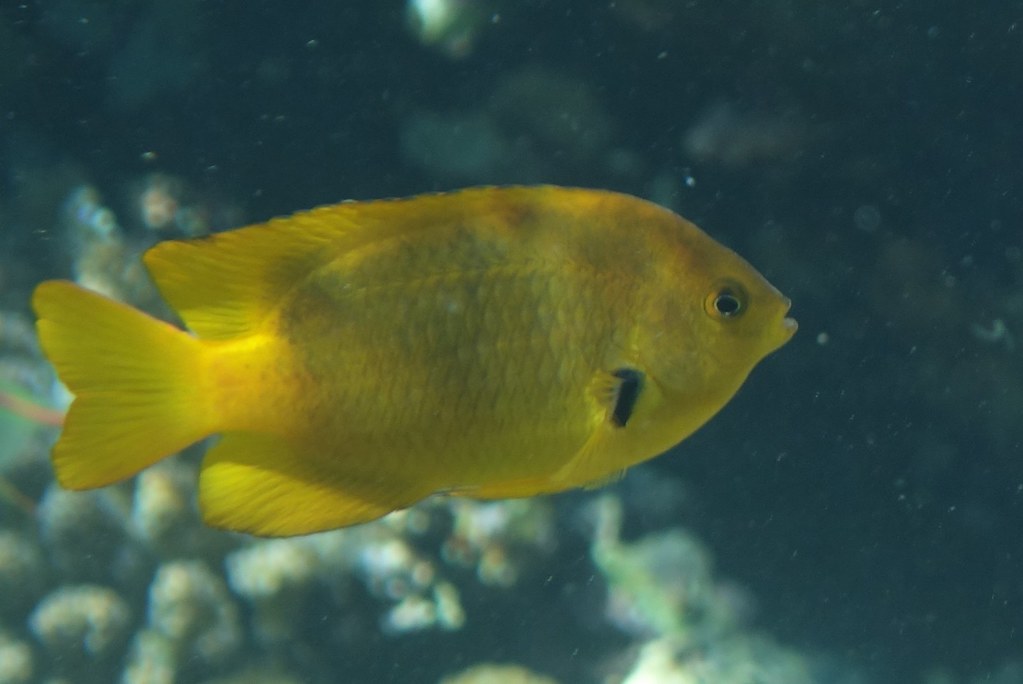
What Hurghada does well is large schools of reef fish – Red Sea bannerfish, sergeants, snappers and goatfish digging in the sand. On the reef you meet butterflyfish in pairs, parrotfish, triggerfish and the orange clouds of sea goldies. Over the sand, look for the bluespotted stingray.
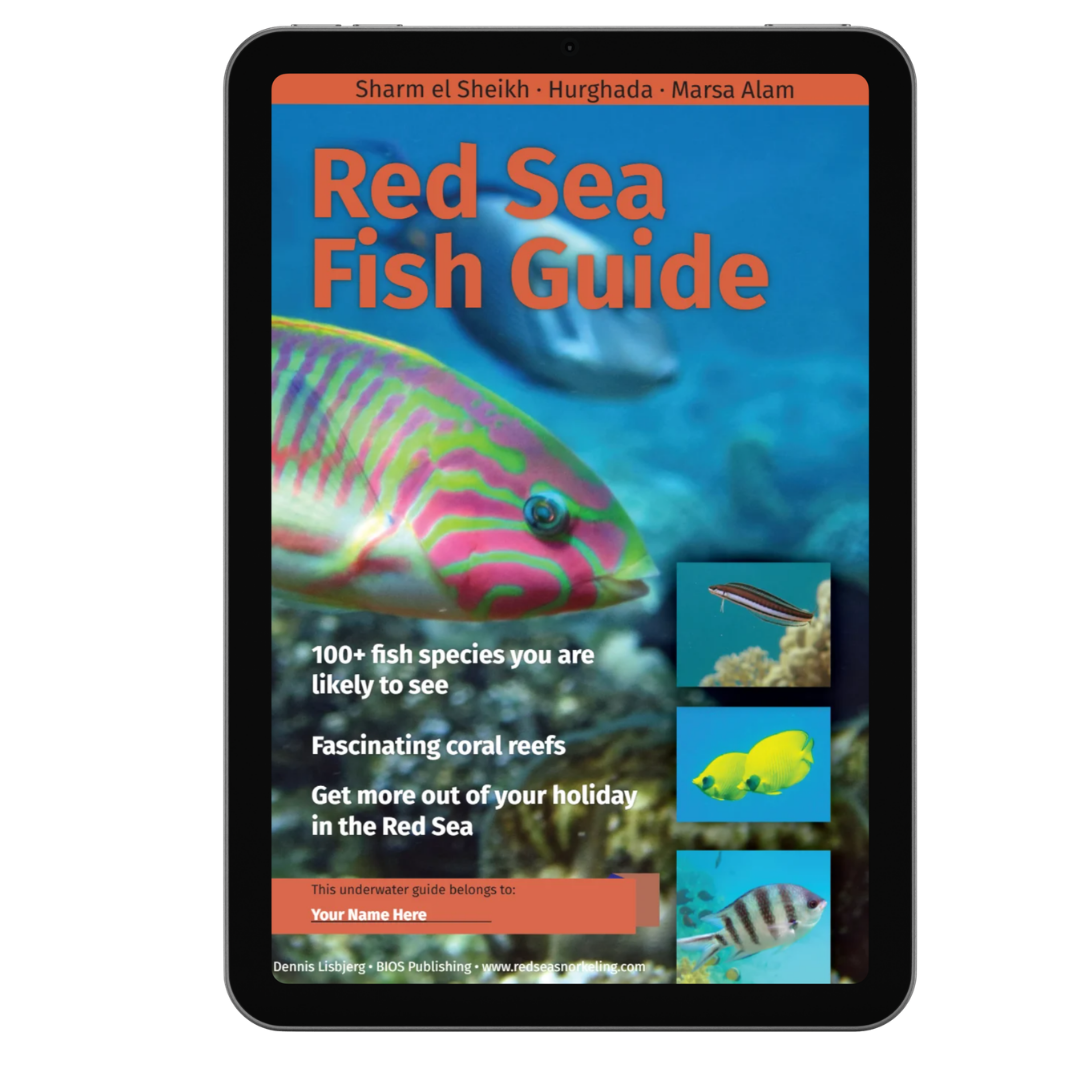
The fish are the same along the whole Egyptian coast. If you want to know what you saw, my fish guide shows the 115 fish you are most likely to meet – sorted by where you see them, not by family. You can also start with the free checklist.
Best time to snorkel in Hurghada
You can snorkel in Hurghada all year. The water is coldest in January–March at around 21–22°C and warmest in August–September at around 28–29°C. In winter a 3–5 mm wetsuit makes a big difference. In summer a rash guard is enough – mostly against the sun.
For most people the best months are March–June and September–November: warm water, comfortable air temperatures and long days.
Keep an eye on the wind. In Hurghada it almost always blows from the north or northwest, and it often gets stronger in the afternoon. Snorkel in the morning when the water is calmest, and stay on the sheltered side of the reef. Before you book a boat trip, check the weather, wind and waves in Hurghada.
A few tips before you go
- Bring your own mask and snorkel. Rental gear is often worn, and a leaking mask spoils the fun.
- Wear fins on boat trips – the current around the islands can be stronger than you expect.
- A t-shirt is better for the reef than a thick layer of sunscreen.
- Never stand on the coral, and do not touch or feed the fish. Here is how to snorkel safely and responsibly on the reef.
- Still choosing where to go? Read my comparison of Sharm, Hurghada and Marsa Alam.
Happy snorkeling!