When you snorkel around in the Red Sea, you can safely enjoy everything you see. As long as you do not try to touch anything.
Safe snorkeling: See – don’t touch
Never touch – not even the “dead” bottom or “dead” rocks. They might very well be alive! So this is another good reason to NOT touch anything on the reef!

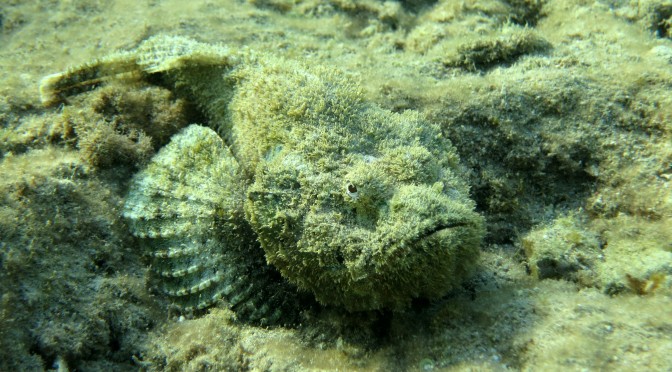
Stonefish — The world’s most venomous fish. Superbly camouflaged on reef rubble, their dorsal spines deliver intensely painful, potentially life-threatening venom. Antivenom exists but requires immediate medical attention.
Scorpionfish — Cryptic ambush predators with venomous dorsal, anal, and pelvic spines. Less dangerous than stonefish but still cause severe pain and potential systemic effects.
Scorpion fish and Stonefish are not easy to see! So, be aware when putting your feet down. Even in the shallow water. It is thus recommended that you always use some kind of wet-shoes or fins to protect yourself when entering or getting out of the water.

Lionfish — Conspicuous with fan-like pectoral fins and venomous dorsal spines. The stings causes intense localised pain, swelling, and occasionally cardiovascular symptoms.
The very spiny Lionfish is not inviting you to pet it. And do not try to! They know that their spines are unpleasant, and if you come too near, they will stretch their spines towards you.
Stingrays — The caudal spine delivers venom causing severe pain, tissue necrosis, and potential secondary infection. Most incidents occur when wading in sandy shallows. So never enter the water in bare feet!
If you are familiar with flat fish, you may consider touching the rays. BUT the Blues potted Stingray can – as the name hints – sting! On the base of the tail they have a spine, and they are quick at whipping this towards you if you come too near.
Bluespotted Stingray
This ray can – as the name hints – sting! On the base of the tail they have a spine, and they are quick at whipping this towards you if you come too near.

But it goes for all of the poisonous fish, that they are not aggressively trying to get to you. It is a selfdefense mechanism, they will turn to, if YOU get too near. If you come within a certain distance, they see you as a threat to them. The poisonous spines are a “attack-is-the-best-self-defence” tactic in these species. All the other animals know this (or will quickly learn it the hard way!), so they are used to, that larger animals stay clear.

Rabbitfish — Often overlooked because they’re common reef herbivores, but their dorsal and anal fin spines carry venom causing significant pain and localised swelling.
But don’t be afraid, be careful
It can sound scary, but taking safety meassures such as wearing shoes or fins when entering the water will keep you safe – as long as you keep your hands to yourself, and to not touch or walk on the reef!